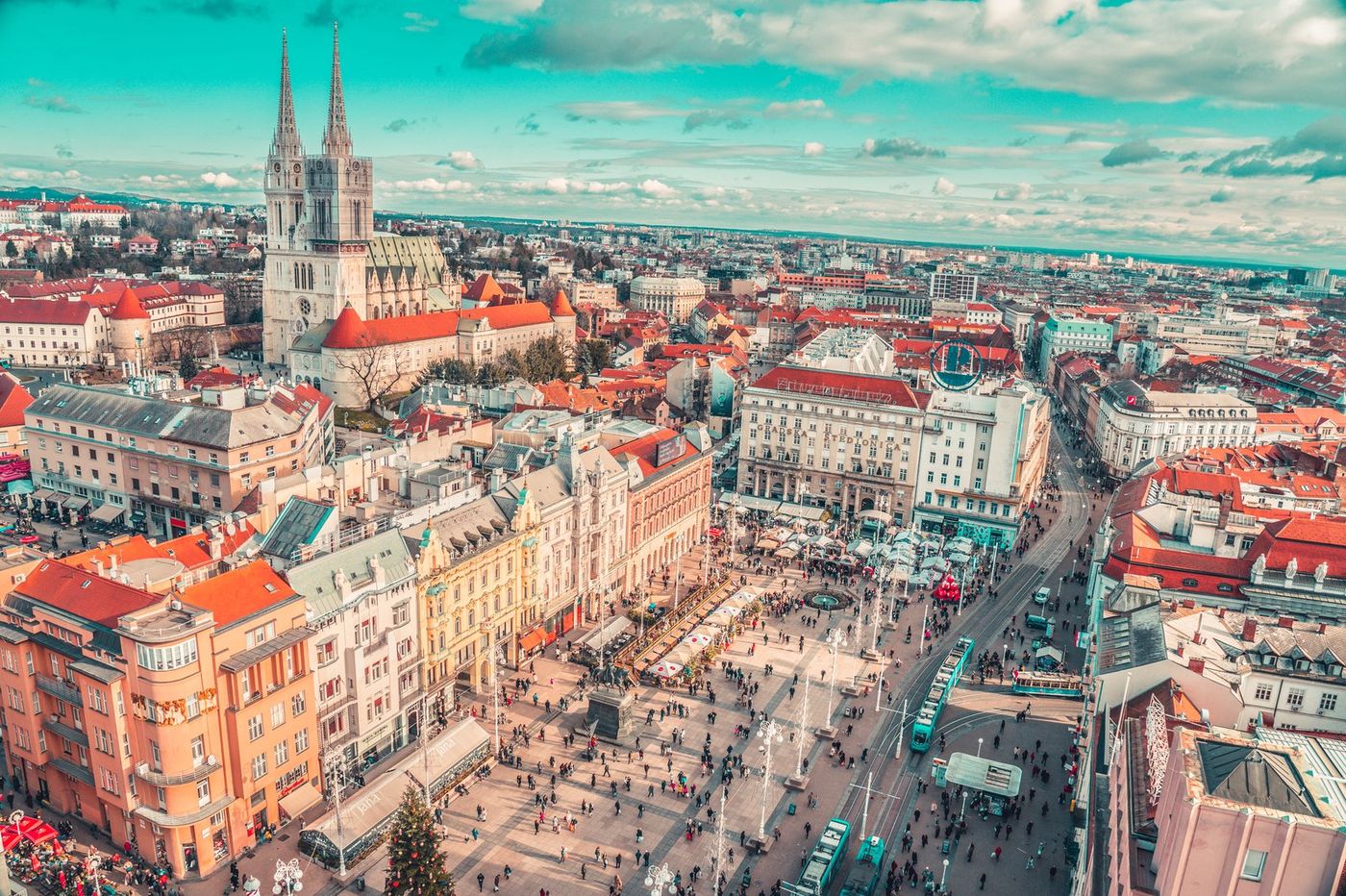
EUROPEAN ANCHOR
Warsaw — Europe's manufacturing engine
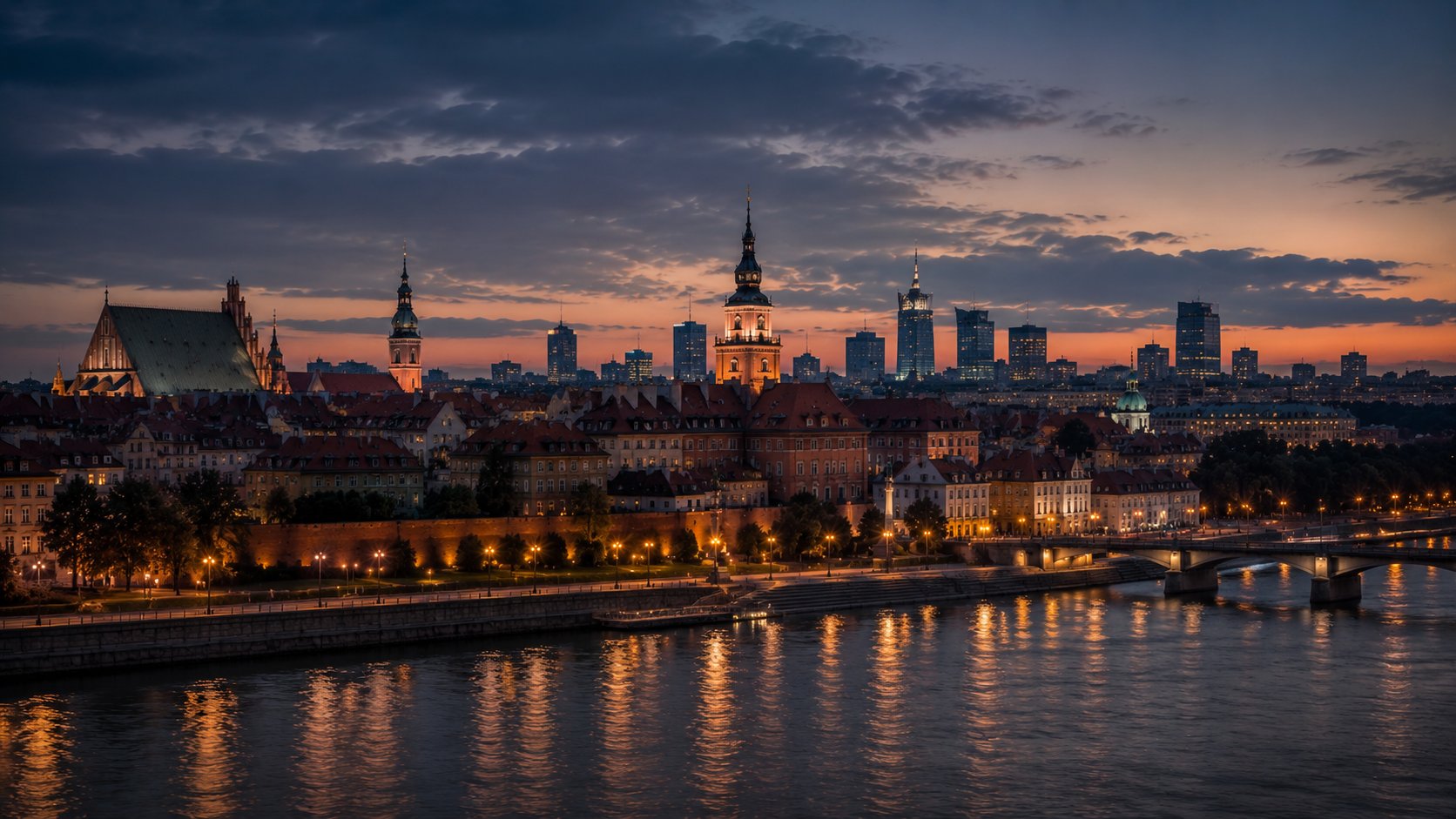
Old town heritage
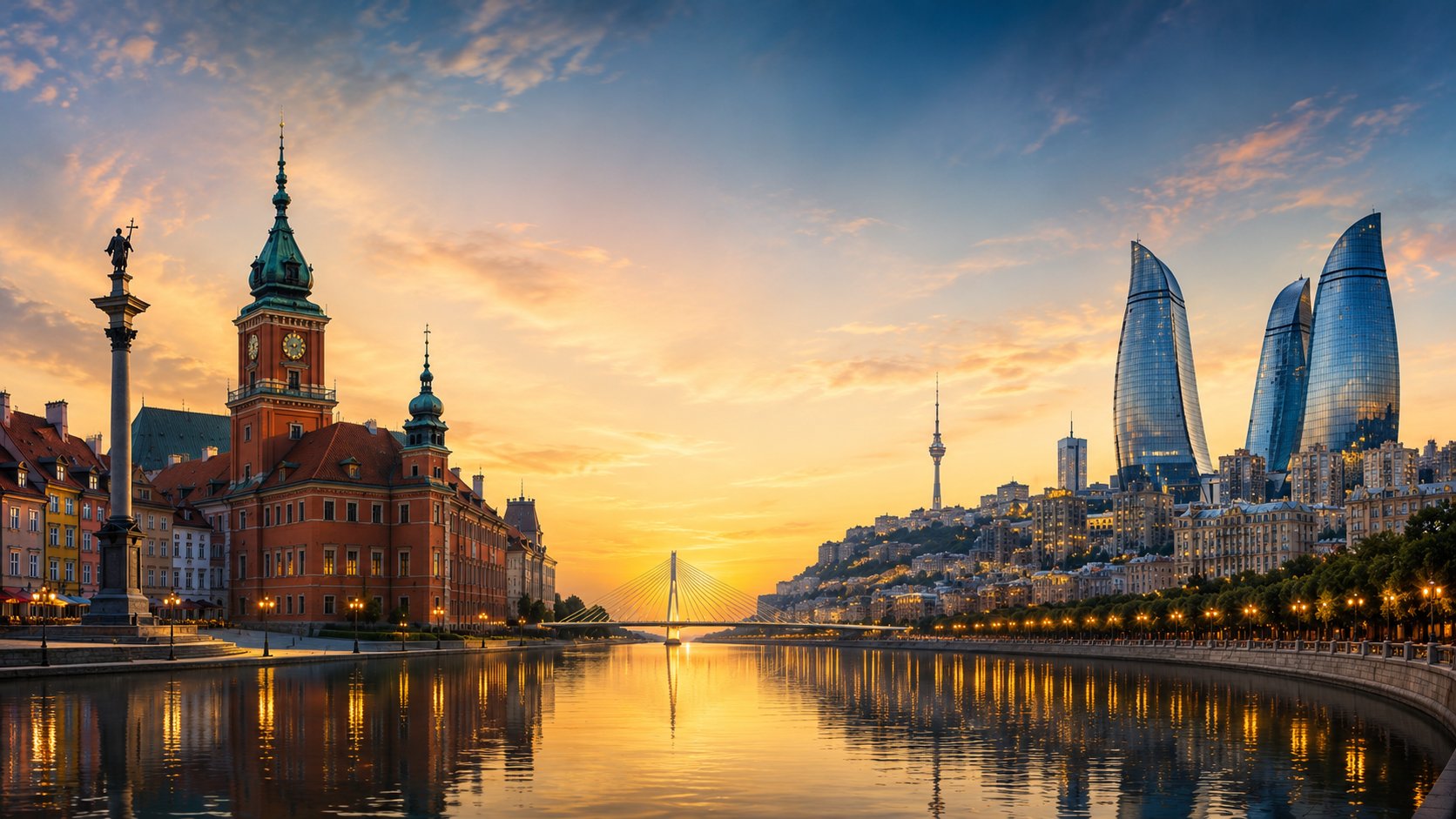
Bridge to the East
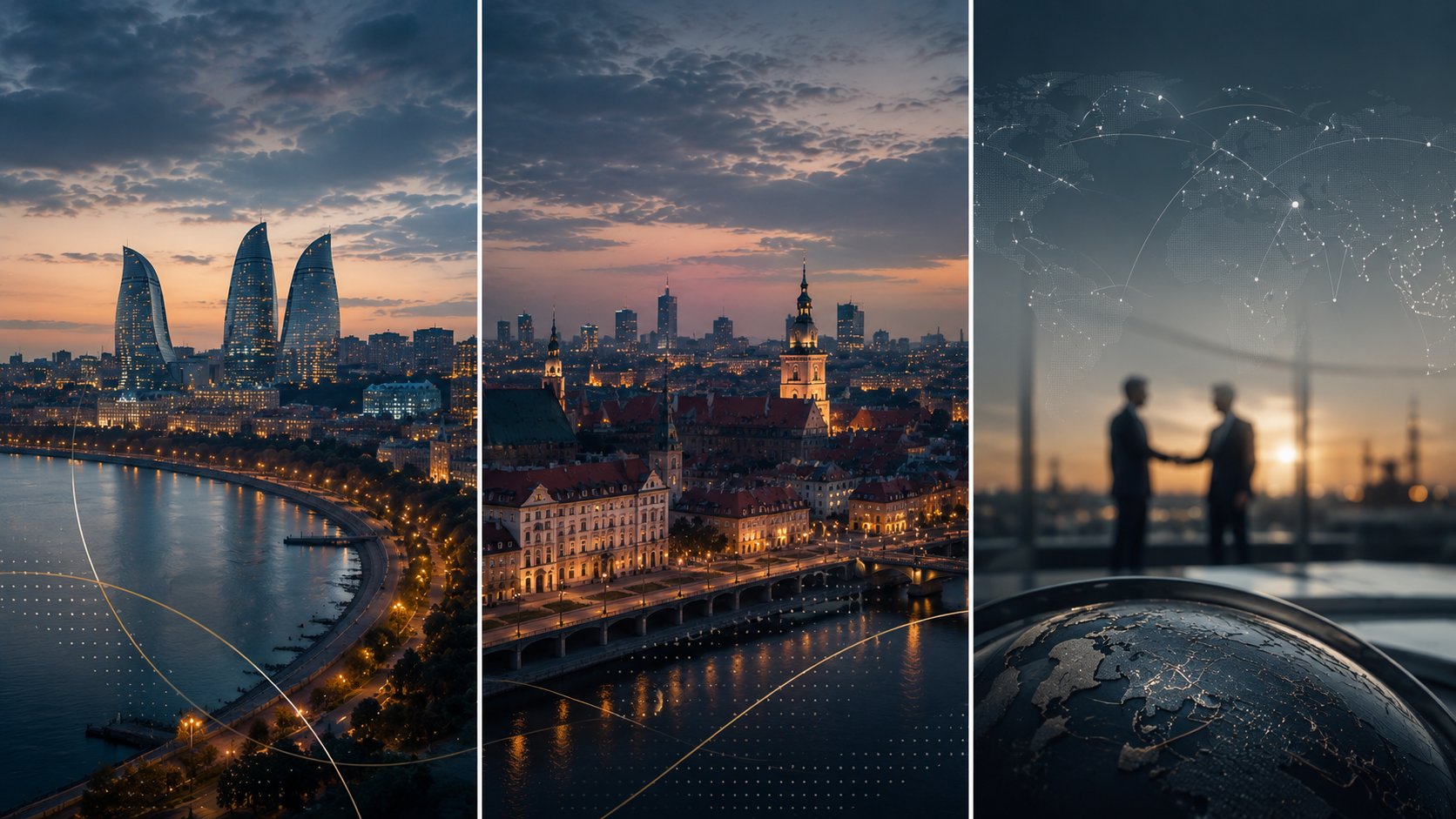
Global trade network
Poland is the European Union's sixth-largest economy, the manufacturing engine of Central Europe, and a strategic gateway between Western European markets and the East — including the Caspian region.
Once an emerging market, today an industrial heavyweight — Poland is the only EU country to have avoided recession during the 2008–09 financial crisis and continues to outpace most of Europe in growth.
Poland is one of Europe's most overlooked economic success stories. Since joining the European Union in 2004, the country has more than tripled its GDP, modernized its infrastructure with EU support, and built one of the most resilient and diversified economies in the continent.
Its location is strategic: bordering Germany to the west, the Baltic States to the north, Ukraine and Belarus to the east, and the Czech Republic and Slovakia to the south. Warsaw and Gdańsk have become major financial and logistics hubs for Central and Eastern European trade — and increasingly for trade with the South Caucasus and Central Asia.
For Azerbaijani enterprises, Poland represents three things: a large domestic consumer market of 38 million people, a manufacturing and re-export base with deep integration into German and Western European supply chains, and a logistics corridor connecting the Caspian region (via Türkiye and the Black Sea) to the entire EU Single Market.
And for Polish enterprises, Azerbaijan offers something equally valuable: direct energy access, infrastructure project opportunities, and a partner in the Middle Corridor — the trans-Caspian trade route that has become strategically critical for European supply chain diversification.
This is the relationship IGPA was built to support.
Poland's economy combines large-scale manufacturing, modern services, and a rapidly growing tech sector. It is one of the few European economies to have grown consistently every year for over three decades.
Share of GDP by sector — Poland's services-driven, industrially-anchored economy.
Poland combines EU regulatory stability with genuinely competitive operating costs, a skilled workforce, and one of Europe's most generous incentive frameworks for foreign investors.
14 special economic zones offering up to 50% corporate income tax exemption. Poland Investment Zone (PIZ) provides location-flexible incentives across the entire country.
Over 1.5M university students, with strong technical and engineering disciplines. Multilingual workforce, particularly in business services. Competitive labour costs versus Western Europe.
Direct access to 450M+ EU consumers. Full Schengen Area integration. EU-wide product standards, regulatory framework, and free movement of capital, goods, services, and labour.
Standard CIT rate of 19%. Reduced 9% rate for small businesses. R&D tax relief up to 200%. Estonian CIT model available. EU's lowest VAT compliance burden in the region.
Mature property market with strong rental yields. Modern industrial parks. Class A office space in major cities. Lower acquisition costs vs. Western European capitals.
PAIH (Polish Investment & Trade Agency) provides one-stop investor support. Grant programs for strategic projects. Direct dialogue between investors and ministries.
Europe's largest manufacturing base outside Germany. Strong in automotive, machinery, electronics, household appliances, and food processing.
Major energy transition underway. Wind, solar, and nuclear projects. Significant investment opportunities in grid modernization and storage.
Strategic location at the crossroads of east-west and north-south European corridors. World-class road, rail, and Baltic port infrastructure.
One of Europe's largest tech talent pools. Strong in software development, R&D, fintech, and shared services centers. Major hubs in Warsaw, Kraków, and Wrocław.
EU's largest producer of apples, blueberries, and rye. Major dairy and meat producer. World-class food processing industry with exports to 100+ markets.
Modern banking and insurance sector. Warsaw Stock Exchange is the largest in CEE. Growing fintech ecosystem and blockchain regulation framework.
Polish-Azerbaijani trade has been growing steadily, driven by energy cooperation, agricultural exchange, and increasing infrastructure project participation. Real upside remains in services, technology, and value-added manufacturing.
14 international airports including Warsaw Chopin and Warsaw Modlin. Direct connections to 200+ destinations. Direct flights between Warsaw and Baku via multiple carriers.
Modern expressway system: 5,300+ km of motorways and expressways. Trans-European corridors (TEN-T) crossing the country east-west and north-south.
20,000 km of rail. Strategic east-west cargo corridor connecting EU to China via Belarus & Kazakhstan. Direct connection to Caspian region via Middle Corridor.
Gdańsk, Gdynia, Szczecin-Świnoujście — Poland's gateway to Northern Europe and beyond. Deep-water container terminal at Gdańsk handling 3M+ TEU annually.
5G nationwide rollout. EU's most affordable mobile data. Fiber broadband reaching 90%+ of households. Major data center hubs in Warsaw and Kraków.
Synchronized with European grid. Major LNG terminal at Świnoujście. New Baltic Pipe (Norway-Poland) operational. Strategic energy diversification underway.
Hundreds of modern industrial parks across the country. Class-A logistics warehousing. Specialized clusters for automotive, pharma, electronics, and BPO/SSC.
400+ higher education institutions. Strong technical universities. Increasing English-language degree programs attracting international students.
Polish business culture combines the formality of Central Europe with the directness of Northern Europe. Understanding these nuances accelerates trust-building.
Download cultural briefUse titles ("Pan/Pani" — Mr./Mrs.) and surnames in initial meetings. First names come only after explicit invitation. Senior decision-makers expect formal address.
Polish business culture values direct communication and clear positions. Avoid excessive small talk in formal settings. Be prepared to answer detailed questions.
Polish enterprises generally prefer multiple meetings before signing. Personal relationships matter, but they complement — not replace — rigorous due diligence.
Arrive 5–10 minutes early for meetings. Late arrivals damage trust. If running late, communicate immediately. This is consistent across sectors and seniority levels.
Verbal agreements are starting points, not commitments. Polish counterparties expect written confirmation of every meaningful decision. Always send follow-up emails.
English is widely spoken in business, especially in Warsaw and major cities. However, Polish-language materials signal commitment and dramatically widen your audience.
Direct links to Polish government agencies, statistical institutes, and public bodies that members and partners rely on for authoritative information.
If your enterprise is considering investment, trade, or partnership in Poland, IGPA can connect you to the right partners, advisors, and institutional contacts. Membership opens the door.